artisan cheesemaker hand cutting fresh curds in copper vat traditional Irish farmhouse dairy

From Pasture
to Plate

Every wheel of Vinatrex cheese is shaped by patience, tradition, and the living landscape of West Cork. Follow the journey from our morning milking to your cheeseboard.

The Art of Cheesemaking

Why Process Matters 🏡

At Vinatrex, cheesemaking is not something we rush. Each variety follows its own rhythm, its own set of temperatures and timings, its own pace of maturation. We believe that the best flavours develop when you give nature room to work. Our role is to guide the process with skill and attention, never to force it.

Our farm dairy sits at the heart of our 120-acre property outside Clonakilty in County Cork. The building was purpose-built in 2015, combining the functional beauty of a traditional stone creamery with modern food safety infrastructure. Stainless steel vats sit alongside hand-tools that have been used in Irish cheesemaking for generations, and the cellars beneath run cool and damp year-round, providing the ideal environment for ageing.

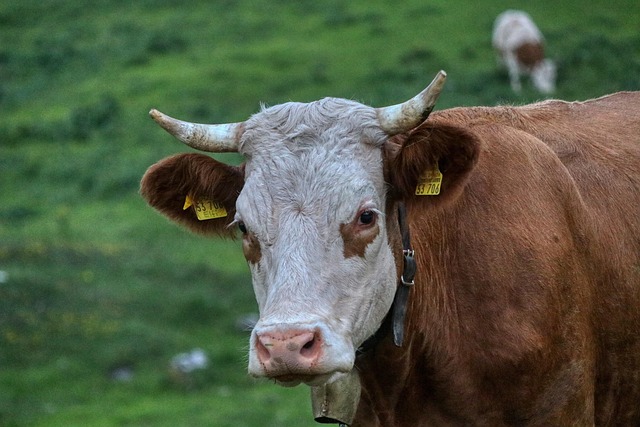
What sets our process apart is the connection between animal, land, and maker. Our herd grazes on clover-rich pastures less than two hundred metres from the dairy. The milk arrives warm and alive with beneficial bacteria, and it enters the vat within sixty minutes of milking. This freshness is something no industrial operation can replicate, and it forms the foundation of everything we produce.

interior of Vinatrex artisan cheese dairy showing stainless steel vats and traditional cheesemaking equipment in County Cork Ireland
Our Philosophy

Three Principles That Guide Us

Behind every wheel of Vinatrex cheese are three commitments that shape our daily work and define the quality of everything we make.

Pasture-First Farming

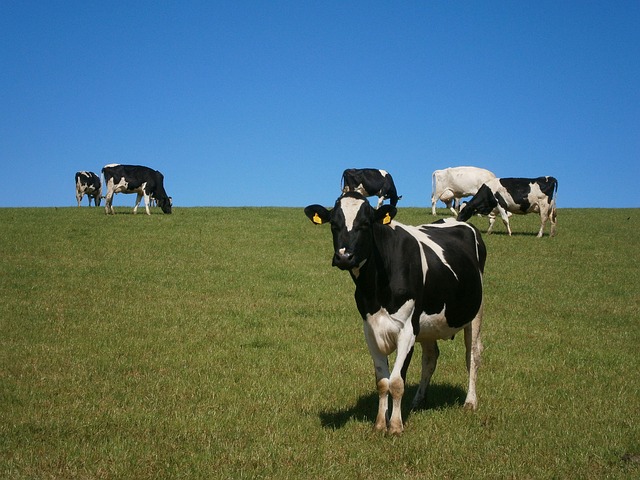
Our cows spend over 280 days a year on grass, feeding on naturally diverse pastures that include clover, ryegrass, and native herbs. We rotate grazing paddocks on a strict schedule that allows each field to regenerate fully before the herd returns. This practice builds soil carbon, promotes biodiversity, and produces milk with higher levels of omega-3 fatty acids and beta-carotene, the compound responsible for the golden hue of our butter-rich cheeses.

Patience Over Speed

Industrial cheese can be produced in hours, but the varieties we craft at Vinatrex demand weeks and months. Our aged Cork Reserve spends a full eighteen months developing in the cellar. Our soft-ripened Meadow Bloom takes five weeks to reach its peak. We never accelerate the process with artificial additives or temperature shortcuts. The result is cheese with genuine complexity, where new flavours reveal themselves with each tasting.

Small-Batch Integrity

We produce between forty and sixty wheels per week, depending on the variety and the season. This small scale allows our cheesemaker to give personal attention to every batch. Each wheel is individually assessed at multiple stages of production and ageing, and any wheel that does not meet our standards is removed. We would rather make less cheese than compromise on what carries our name.

Step by Step

The Journey of a Vinatrex Cheese 🧈

From the first light of morning to the quiet patience of the ageing cellar, follow each stage of our traditional cheesemaking process.

Step 01 — Early Morning

The Morning Milking

Each day begins at half past five, when our herd makes its way from the overnight paddock to the milking parlour. Our herd of 85 Friesian and Jersey cows produces milk that is unusually rich in butterfat and protein, thanks to their grass-based diet and the mineral-rich soil of our West Cork farm. Milking is completed by seven, and the fresh, warm milk is pumped through a short pipeline directly into the dairy.

Before any cheese production begins, we test every batch for composition, acidity, and cleanliness. Seasonal variation in the milk is something we embrace rather than correct. Spring milk, rich from new grass, gives a different character than autumn milk, and these subtle shifts are part of what makes artisan cheese alive and expressive.

dairy cows being milked at dawn in traditional Irish milking parlour with morning light streaming through windows
cheesemaker adding natural rennet to warm milk in large stainless steel vat artisan dairy production
Step 02 — Mid-Morning

Culture & Coagulation

Once the milk has been gently warmed to the target temperature, which varies between 28°C and 34°C depending on the cheese variety, we introduce our starter cultures. These are living bacterial strains that begin to acidify the milk and develop the foundational flavour compounds. Some of our cultures are proprietary blends that we have refined over the past decade.

After the cultures have had time to work, we add natural animal rennet, which causes the milk to coagulate into a soft, jelly-like curd. This transformation takes between thirty and ninety minutes. Our cheesemaker monitors the set closely, testing the curd with a knife until it breaks cleanly, a sign that it is ready for cutting. Timing here is everything; too early and the curd is weak, too late and it becomes rubbery.

Step 03 — Late Morning

Cutting, Stirring & Cooking

The curd is cut by hand using traditional multi-blade harps. The size of the cut determines the moisture level of the finished cheese. For our soft Meadow Bloom, we cut the curd into large, walnut-sized pieces that retain more whey and produce a creamy texture. For the aged Cork Reserve, we cut much finer, creating small pea-sized curds that will develop into a dense, crumbly structure.

After cutting, the curds are gently stirred by hand as the temperature is slowly raised. This process, known as scalding or cooking, firms the curds and expels additional moisture. The whey that separates is collected and used as a natural fertiliser on our pastures, closing the loop between dairy and land. Nothing is wasted on a Vinatrex production day.

close up of hand cutting fresh white cheese curds with traditional harp cutter in artisan dairy vat
freshly pressed cheese wheels in traditional moulds being turned by hand on wooden draining table
Step 04 — Afternoon

Moulding, Pressing & Brining

The curds are carefully scooped into moulds lined with cheesecloth. Each mould gives the cheese its distinctive shape and size. We use round moulds for our cheddar and smoked styles, and smaller flat moulds for the soft-ripened varieties. The filled moulds are placed under mechanical presses that apply steady, even pressure over several hours, gradually expelling remaining whey.

Once pressed, the young cheese is unmoulded and transferred to a brine bath containing a solution of natural Irish sea salt. Brining serves two purposes: it develops the rind by drawing surface moisture outward, and it seasons the cheese evenly throughout. Brining times range from two hours for our soft cheese to twenty-four hours for the larger aged wheels. The salt also acts as a natural preservative during the long ageing ahead.

Step 05 — Weeks to Months

Ageing & Affinage

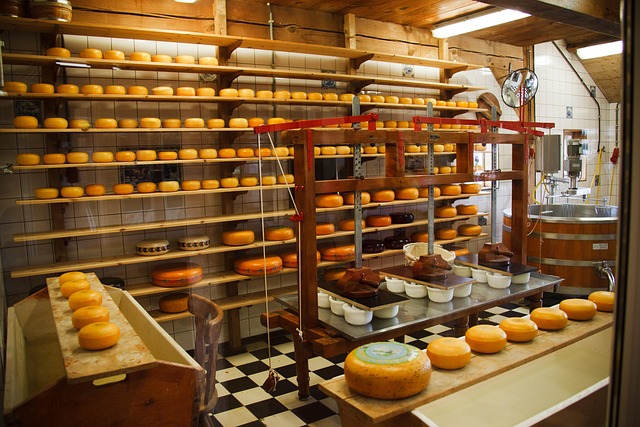
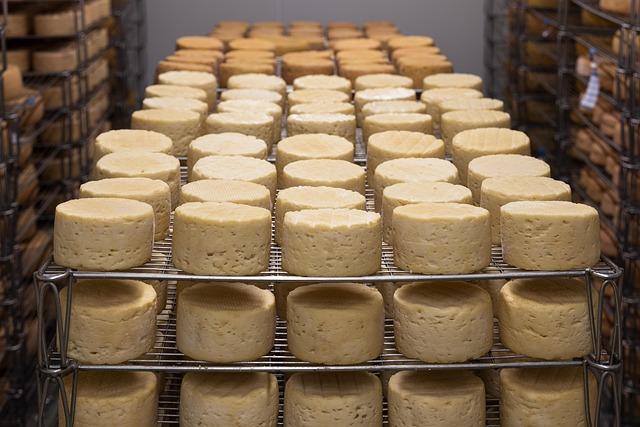
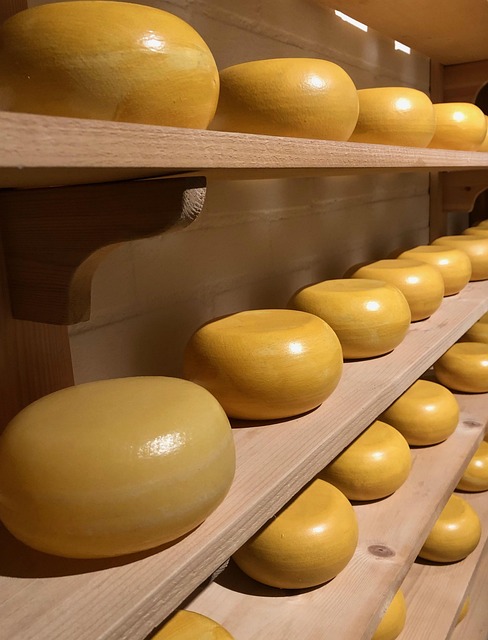
This is where the magic happens. Our underground cellars, carved into the bedrock beneath the farm, maintain a natural temperature between 10°C and 13°C and humidity above 90 percent. These conditions are ideal for the slow enzymatic reactions that transform young, bland curds into richly flavoured mature cheese.

During ageing, our cheesemaker visits the cellars daily to turn the wheels, brush the rinds, and assess development. The Cork Reserve is turned twice weekly for its entire eighteen-month life. The Atlantic Blue receives periodic piercing with stainless steel needles to allow oxygen to reach the Penicillium roqueforti cultures within, encouraging even veining. The Oakwood Smoke spends its final forty-eight hours in our cold-smoking chamber, where Irish oak chips impart a gentle, layered smokiness.

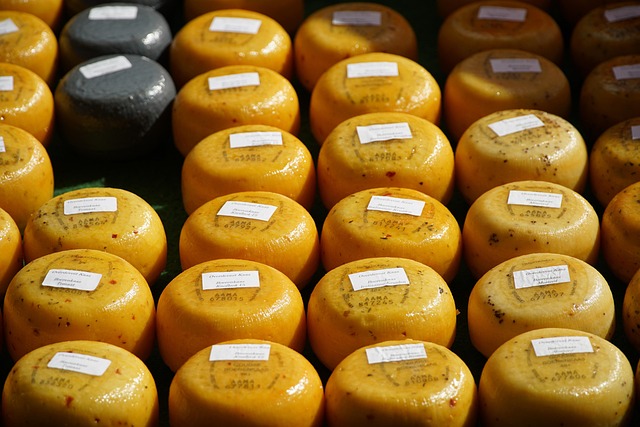
underground cheese ageing cellar with rows of golden cheese wheels on wooden shelves in dimly lit stone room
selection of artisan Irish cheeses beautifully wrapped and displayed on rustic wooden board ready for sale
Step 06 — Ready for You

Selection & Dispatch

When our cheesemaker determines that a wheel has reached its peak, it is selected for sale. Each wheel is carefully inspected one final time, weighed, and graded. We hand-wrap our cheeses in waxed paper and sustainable packaging materials, ensuring they arrive in perfect condition whether they are destined for a farmers market in Cork, a restaurant in Dublin, or a home kitchen anywhere in Ireland.

We dispatch orders three times per week using chilled courier services, and we include tasting notes and pairing suggestions with every delivery. Our farm shop is open for visitors on Saturdays, where you can sample the full range and speak directly with the people who made your cheese. There is something deeply satisfying about purchasing food from the place where it was born.

85 Grass-Fed Cows
60 Minutes Farm to Vat
18 Months Max Ageing
0 Artificial Additives
sustainable farming practices on Irish pastureland with wildflowers hedgerows and grazing cattle in County Cork countryside
Sustainability

Caring for the Land That Feeds Us 🌱

Sustainability is not a marketing term for us. It is the practical reality of farming the same piece of land for over a decade and wanting to hand it on in better condition than we found it. Every decision we make on the farm, from grazing rotations to energy sourcing, is weighed against its long-term impact on the soil, water, and biodiversity of our corner of West Cork.

Our whey, the liquid by-product of cheesemaking, is returned to the fields as a natural fertiliser rich in nitrogen and minerals. We have planted over three thousand native trees and hedgerow species since 2016, creating habitat corridors for pollinators, birds, and small mammals. Our milking parlour and dairy are powered by a combination of solar panels and a biomass boiler that burns sustainably sourced Irish wood chip.

We use minimal plastic in our packaging, opting for compostable waxed papers, recycled card boxes, and plant-based inks. Our delivery partners use chilled, reusable wool-insulated containers for all online orders, and we offer a deposit-and-return scheme for customers who visit our farm shop. We track our carbon footprint annually and work with Bord Bia's Origin Green programme to set measurable improvement targets.
Origin Green Member
Solar Powered Dairy
3,000+ Trees Planted
Tools of the Trade

Traditional Tools, Modern Standards 🔧

We use a blend of heritage equipment and contemporary food-safe technology. The hands remain the most important tools in our dairy.

copper cheese vat for traditional artisan cheesemaking in small farmhouse dairy

Copper Vats

Our primary vat holds 500 litres and is made from food-grade copper, which distributes heat evenly and contributes trace minerals to the cheese. We also use a smaller 200-litre vat for experimental batches and limited-edition varieties. Both are cleaned and sanitised to the highest standards after every use.

hand carved wooden cheese moulds and linen cheesecloth on traditional dairy work bench

Moulds & Presses

We maintain a collection of stainless steel and food-safe plastic moulds in various sizes. Our mechanical cheese press allows us to apply precise, consistent pressure, which is critical for developing the correct moisture levels. For our softer varieties, we use gravity draining rather than pressing, allowing the curd to compact naturally overnight.

underground stone cheese ageing cave with controlled temperature and humidity monitoring equipment

Ageing Cellars

Beneath the dairy, two cellar rooms provide naturally cool, humid conditions for ageing. Digital sensors monitor temperature and humidity around the clock, sending alerts to our cheesemaker if conditions drift outside target ranges. The stone walls and earth floor contribute to the stable microclimate that makes our ageing programme possible without heavy energy use.

rustic table setting with artisan cheese board wine and fresh bread in warm golden lighting

Ready to Taste the Difference?

From our farm to your table, every wheel of Vinatrex cheese carries the care of our hands and the richness of the Irish landscape. Browse our collection or visit us in Clonakilty.

Common Questions

Frequently Asked About Our Process ❓